Cheatsheets
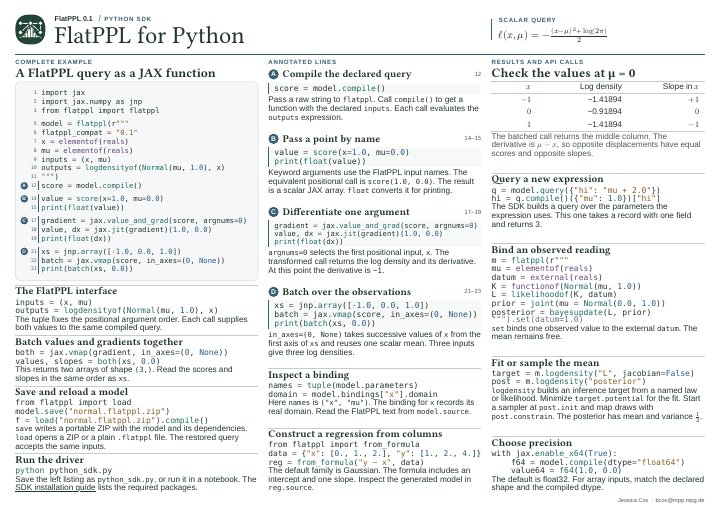
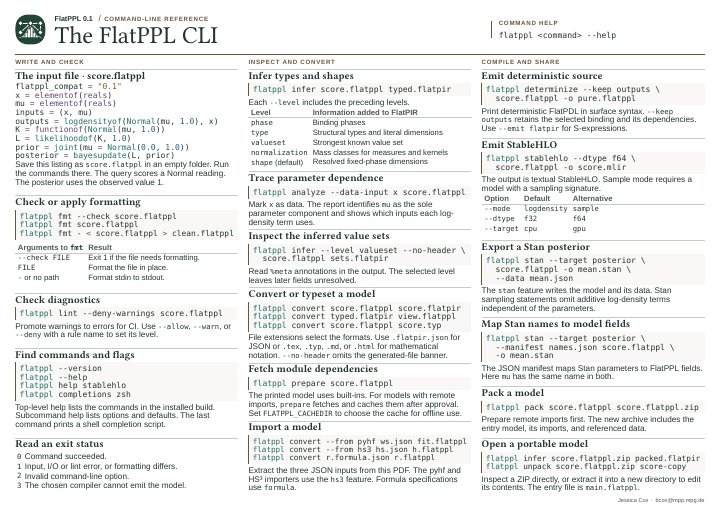
One-page references for the FlatPPL language, modelling, and tools.
Core language
-
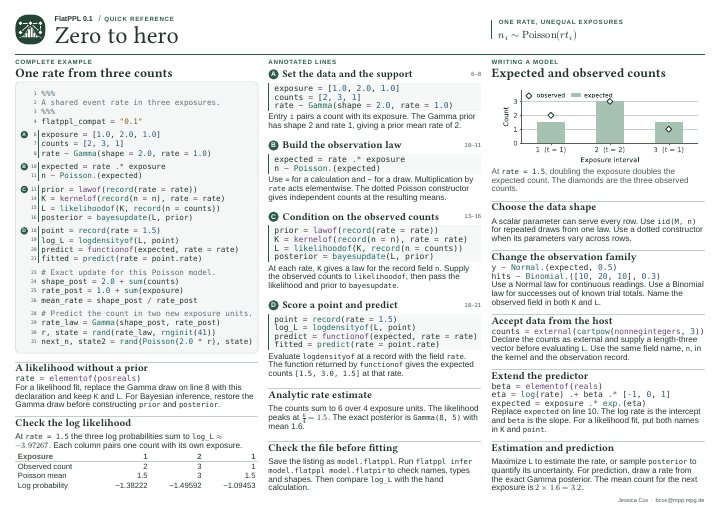
Zero to hero
PDFWrite, score, and check a model from three counts.
-
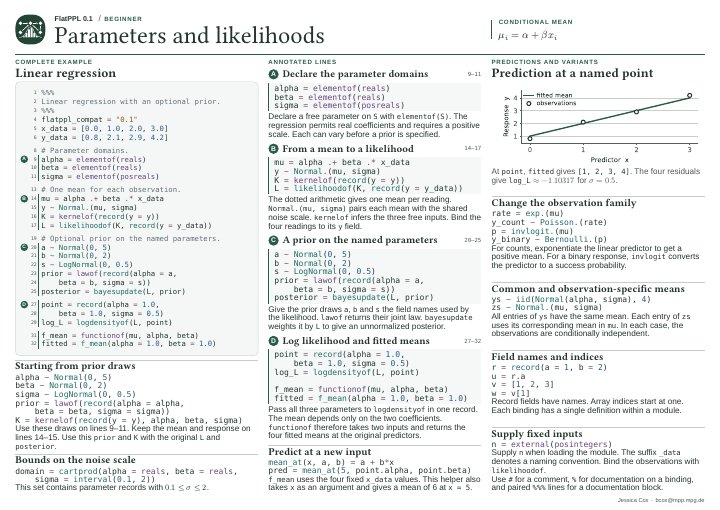
Beginner: simple models
PDFAuthor a complete Bayesian or likelihood-only model.
-
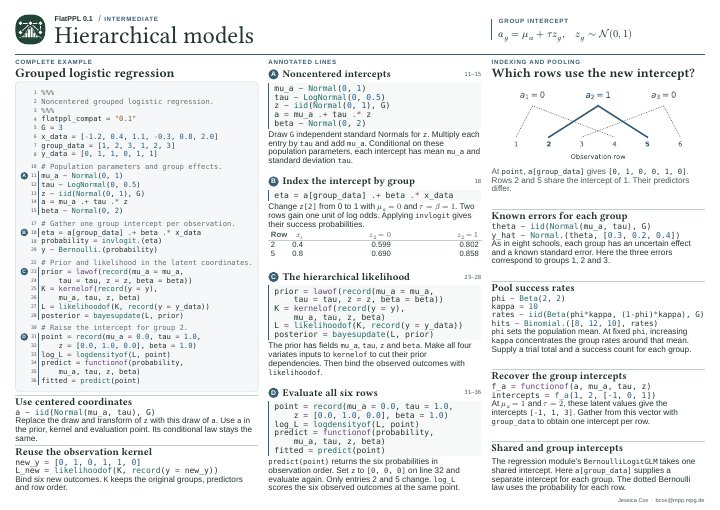
Intermediate: hierarchical models
PDFAuthor grouped and multilevel models.
-
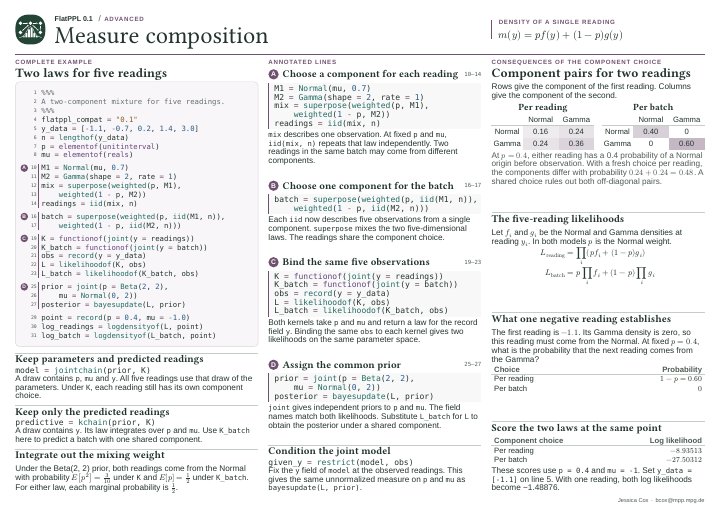
Advanced: measure composition
PDFBuild models from measures and kernels.
-
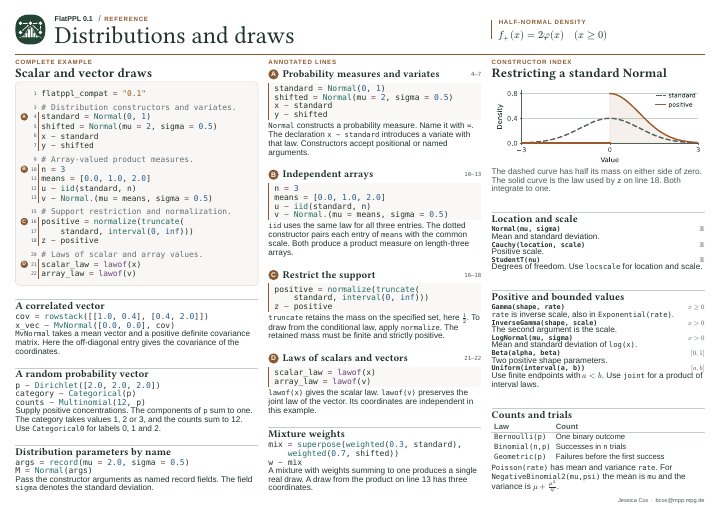
Distributions
PDFConstruct scalar, vector, and product distributions.
-
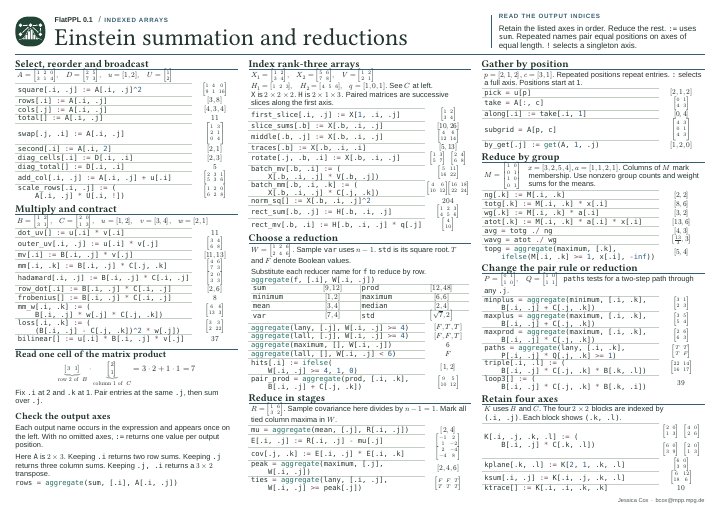
Einstein summation and reductions
PDFCompare inputs and results for indexed products, axis permutations, and reductions.
-
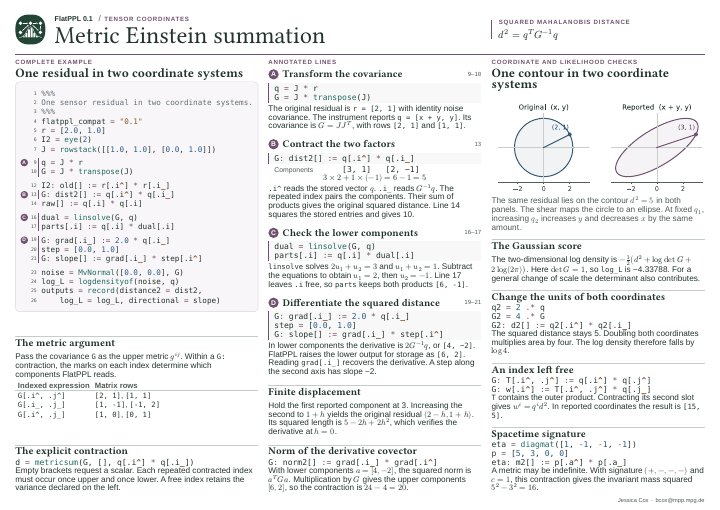
Metric Einstein summation
PDFRecover the same squared distance after a change of sensor coordinates.
Modelling and inference
-
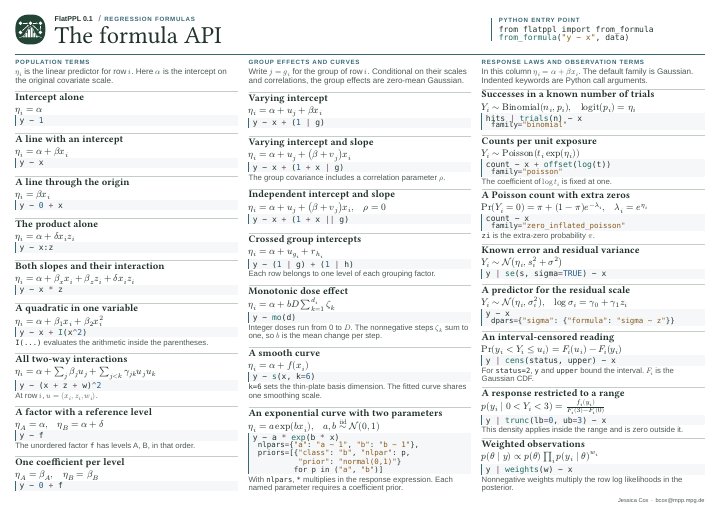
The formula API
PDFTranslate equations into regression formulas for population terms, group effects, curves, and observation laws.
-
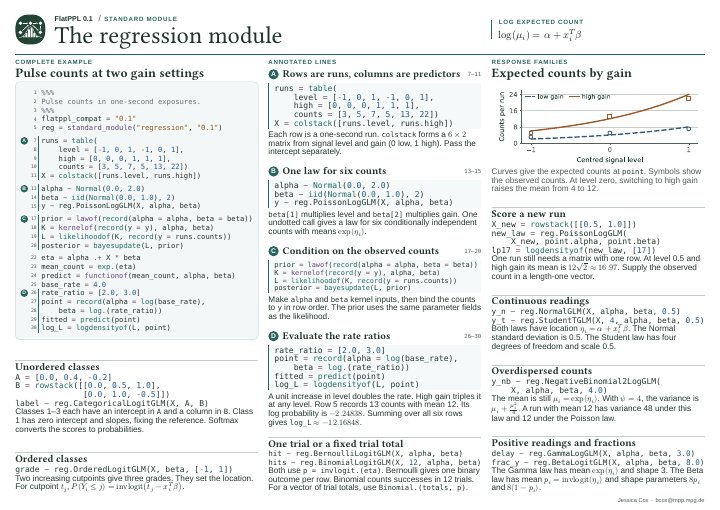
The regression module
PDFBuild a design matrix and choose a response law for continuous readings, counts or classes.
-
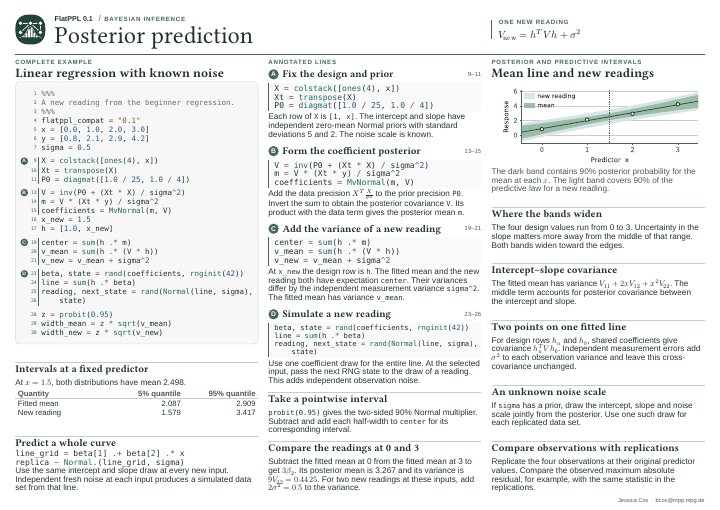
Posterior prediction
PDFDistinguish uncertainty in a mean from a new reading.
-
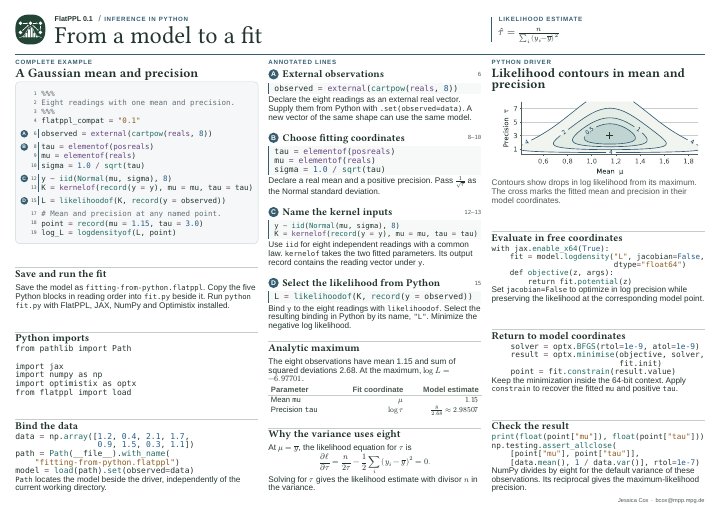
From a model to a fit
PDFFit a FlatPPL likelihood from Python and verify the estimate.
-
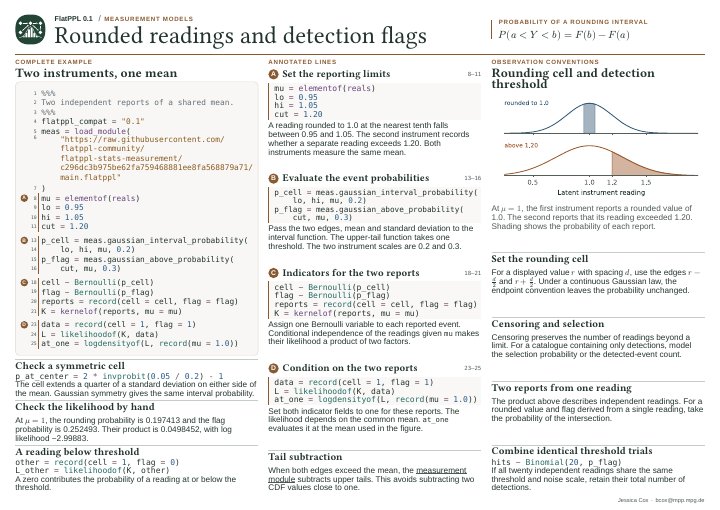
Rounded readings and detection flags
PDFScore the events an instrument actually reports.
-
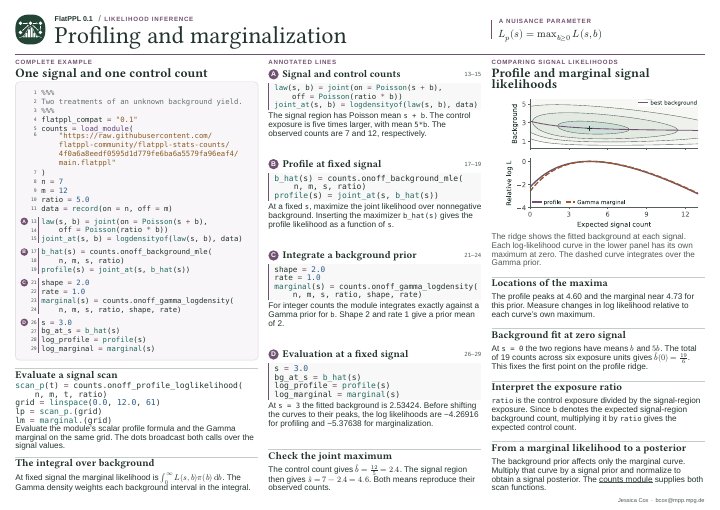
Profiling and marginalization
PDFProfile or integrate a nuisance background.
-
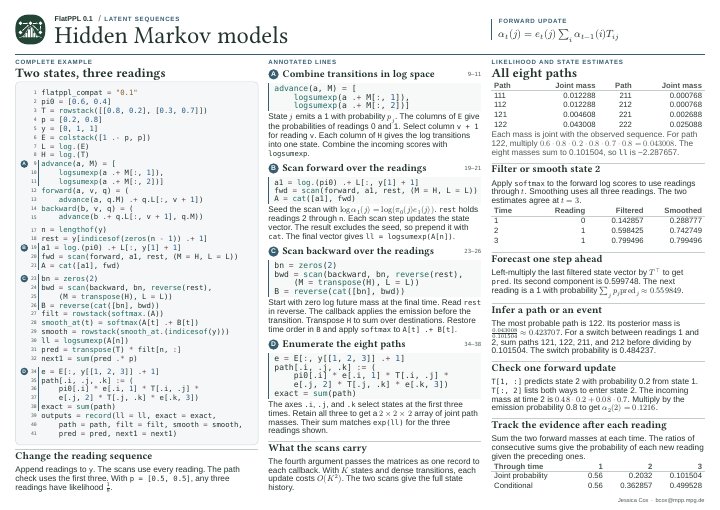
Hidden Markov models
Physics and applications
-
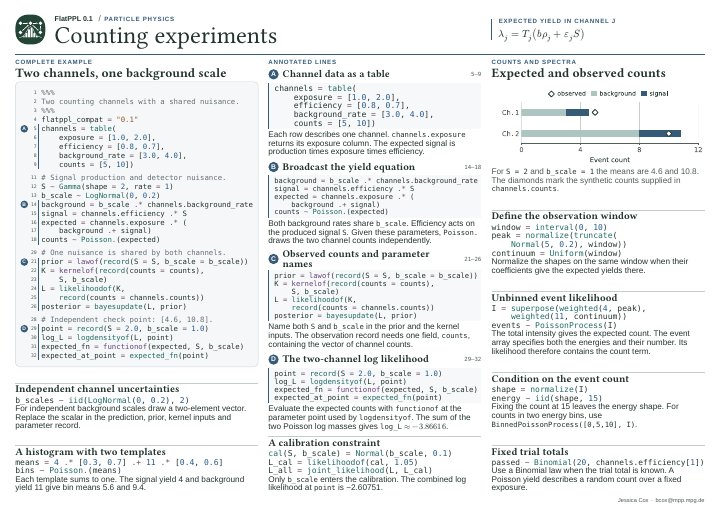
Particle counting and spectra
PDFCombine channels, nuisances, templates, and event intensities.
-
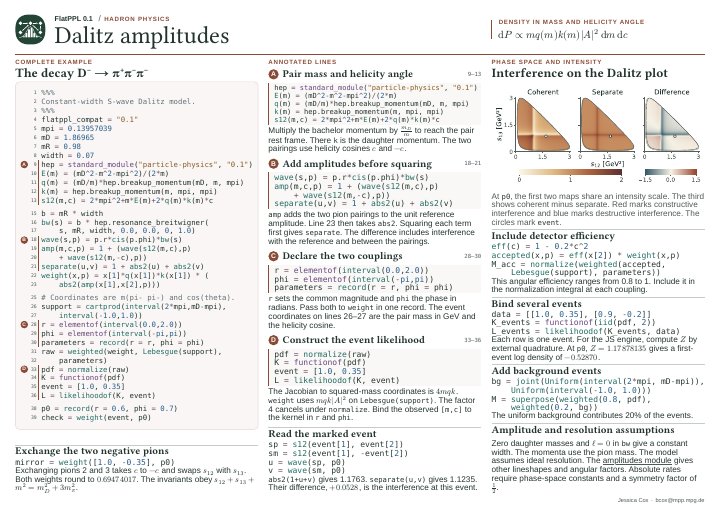
Hadron amplitudes and Dalitz plots
PDFConstruct a Bose-symmetric amplitude and phase-space measure.
-
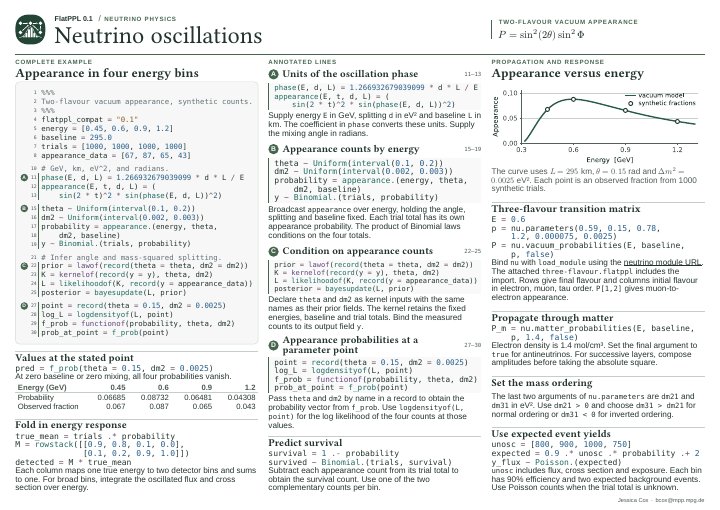
Neutrino oscillations
PDFConnect propagation functions to observed counts.
-
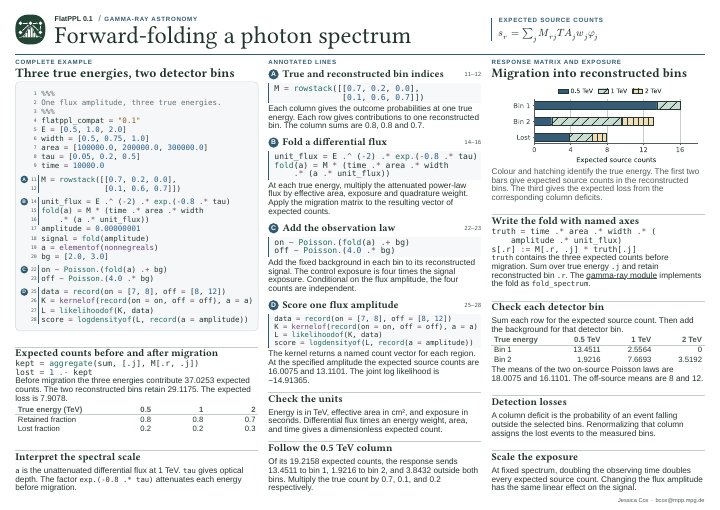
Forward-folding a photon spectrum
PDFPredict detector counts from a true-energy spectrum.
-
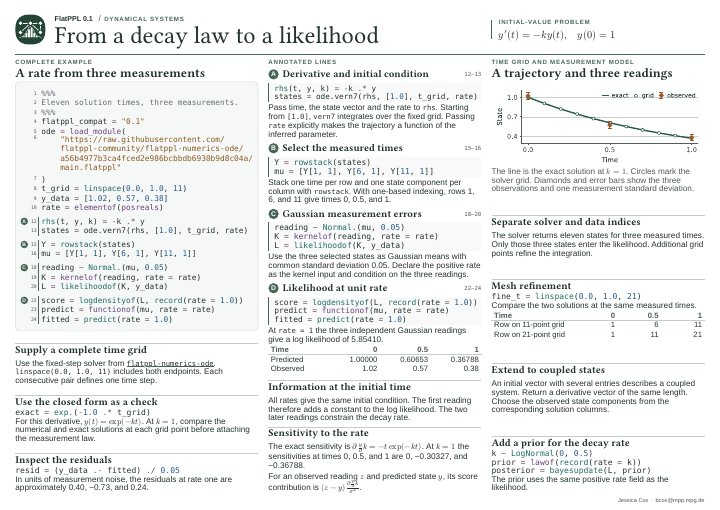
From a decay law to a likelihood
PDFFit observations at selected solution times.
-
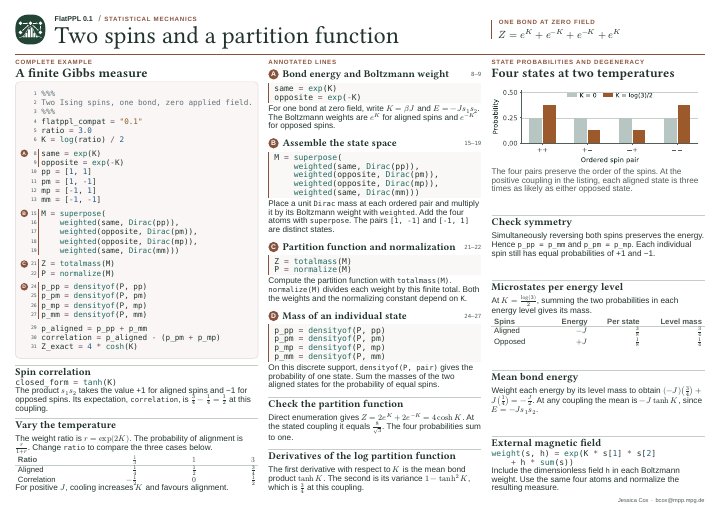
Two spins and a partition function
PDFBuild and normalize a finite Gibbs measure.